Wednesday, May 3, 2006

Taming the winter moth

By Joseph S. Elkinton/Special To The Tab

My laboratory at the University of Massachusetts in Amherst has embarked on an effort to control the winter moth, Operopthera brumata, a major new threat to our forests and shade trees. The winter moth is native to Europe and has recently invaded eastern Massachusetts and caused widespread defoliation of many kinds of deciduous trees, including all species of oak and maple. In addition, it represents a threat to blueberry and apple crops. Severe tree defoliation has occurred at sites near Cape Ann and throughout the South Shore and Cape Cod. It has probably been established in eastern Massachusetts for about a decade, but no one knows how it got here or exactly where it was first established. Until 2003, it was thought to be a native species, the fall cankerworm, Alsophila pometaria. Close examination of the adult females in December 2003 proved that it was neither fall cankerworm nor the Bruce spanworm, Operopthera bruceata,a native species that is very closely related to the winter moth. All three species are in the inch-worm family of moths that feed in early spring and then drop to ground in late May where they form earthen cocoons in the soil or forest litter. The adult winter moths emerge in November or December. The females have no wings. They climb the trunks of trees and produce a pheromone that attracts the winged males. After mating they lay eggs in bark crevices, which then hatch the following spring. Many people in eastern Massachusetts have been startled by the large numbers of male winter moths they have seen flying in early evening at Christmas time. This phenomenon accounts for the name winter moth.

We believe we have an excellent chance to use natural controls to prevent future defoliation by winter moth and to convert it to a non-pest status similar to that of the hundreds of native caterpillar species that exist in our forests without ever causing outbreaks. Invasions of winter moth have occurred at other sites in North America, namely Nova Scotia in the 1950s and in the Pacific Northwest in the 1970s. In each case, a decade-long outbreak has been successfully and permanently controlled by the introduction of a parasitic fly called Cyzenis albicans, from Europe, where it is one of the naturally occurring parasites of winter moth. In Nova Scotia, they first released C. albicansin 1954. High levels of parasitism did not occur until 1961, but after that winter moth retreated to low density where it has remained ever since.

One of the most attractive features about C. albicansis that it specializes on winter moth and does not attack any other species with the possible exception of Bruce spanworm. That means that C. albicanswill not have any unintended effects on other species and when it suppresses winter moth densities, it will suppress its own density as well. People will be unaware that this fly is present in their back yards just as they are unaware of the many native species of parasitic flies and wasps that attack native insects in their yards.

In April 2005, we received about 5,000 winter moth pupae shipped to us from Victoria BC by colleagues in the Canadian Forest Service. Many of these pupae were infested with C. albicans, and from this batch we obtained 832 adult flies of which about half were females. On May 4, 2005, we released 225 C. albicansat a site in Wompatuck State Park in Hingham, where we have collected data on parasitism of winter moth since 2004. The remaining flies were held in the laboratory to produce eggs for production of more flies for next year. Based on similar work in Nova Scotia, we do not expect to see much, if any, parasitism for several years, because the eggs laid by a few hundred released flies are dispersed among the millions of winter moths at this site.

We believe that our efforts to control winter moth by introducing C. albicansare almost guaranteed to work because the approach has already worked before at two other locations in North America. If so we will achieve permanent solution to the winter moth outbreak that will require no further expenditures once we get C. albicans established. However, in order for the introduction to work within a reasonable time frame (e.g. five years) we must invest sufficient funds to be able to release several thousand C. albicansfrom as many sites as possible each year. Otherwise it could be a decade or more before the parasitoid population catches up with the already huge winter moth population. Last year we estimated that there were approximately a quarter million winter moth eggs being laid in each tree. With several million trees infested, the estimated size of the winter moth population in eastern Massachusetts is several trillion!! It will take some years for a few thousand C. albicansto multiply sufficiently to catch up. As with any biological control project, we must release a sufficient number of parasitoids at each site in order to assure that the next generation of parasitoids are abundant enough to find mates. Luckily the Massachusetts state legislature is considering a bill to provide the necessary funding for this initiative.

Joseph S. Elkinton is Professor of Entomology in the Department of Plant, Soil and Insect Science, University of Massachusetts, Amherst, elkinton@ent.umass.edu, 413-545-4816.

This article is archived at www.greendecade.org/tabarchive.asp.

Read More...

Wednesday, April 5, 2006

Artificial turf: Solution or problem?

By Gilbert Woolley/ Special To The Tab


Astroturf, the original brand of artificial turf, was used for the first time in 1968 in the

Houston Astrodome baseball stadium. Many indoor and some outdoor fields were

covered in Astroturf, but the surface was well described by a critic as "carpet on

concrete" and it fell out of favor.


In the early 21st century several brands of artificial turf have overcome some of

limitations of Astroturf and other early products.


Construction varies in detail, but the newer products try to produce a playing surface

that is close to that of natural turf. This is achieved by adding around an inch and a

half of a resilient material, sometimes mixed with sand, around the synthetic "grass

blades," which can be made of nylon, polyethylene or polypropylene (which in turn can

be made from recycled plastic. The resilient material is, typically, ground up waste

rubber from worn out tires, or in one case, the soles of athletic shoes.

It has been estimated that an average soccer or football field of artificial turf uses

45,000 recycled tires that might otherwise take up space in a landfill or an illegal waste

site. About 250 million scrap tires are generated in the US every year. Today 80

percent are ground up and recycled: 30 percent mixed with asphalt for highways; 30

percent mixed with plastics for molded products which do not need to have a good

appearance; and 15 percent are used for athletic surfaces, including artificial turf.

Artificial turf is low maintenance, and requires no herbicides, pesticides, or watering,

and no need for reseeding. The most important advantage, with respect to the

management of the field, is that it can be played on every day, winter and summer. It

doesn't get bald patches and doesn't get muddy when it rains.


Disadvantages are that, in summer, artificial turf gets much hotter than natural turf, but

this problem is not so critical in Massachusetts as some places. Also, dealing with

animal droppings and human "body fluids" is more difficult. On natural turf, there is

natural "treatment" from bacteria in the soil, but on artificial turf solids must be

frequently removed and the surface sanitized. The "sanitizer" must be harmless to the

skin of players.


The improved artificial turf has been widely accepted in the US but In Europe the

response has been mixed. FIFA, the international organization governing soccer has

approved Field Turf, one of the newer brands, for all games, except for World Cup

tournaments. (The English governing body for soccer approves it for practice but not

for league games while the Scottish Premier League banned artificial turf for

competition matches in 2005.)


The trade association of natural turf providers claims that ground up tires are

hazardous and supports this claim by pointing out that tires are banned from many

landfills. But, in fact, the reasons tires are banned from landfills is that they are a

breeding ground for mosquitoes, create a risk for serious fires that are hard to

extinguish, and that tires are unstable in landfills.


Of course, just because turf is "natural" does not mean it is environmentally harmless.

Large amounts of fertilizer, herbicides and pesticides are sometimes used to keep a

field in first class shape. Newton practices Integrated Pest Management, which

reduces the use of these products significantly, but maintaining the fields may still

require the use of materials that we would prefer to keep out of storm drains.

If gas or diesel powered machines are used for mowing, or to spread fertilizer, that

has environmental impact, as does the use of large quantities of water, usually

drinking quality, to keep the grass healthy.


It is most likely that, at end of life, the artificial turf may be too heavily soiled to be

economically recycled and will need to be disposed of in a landfill. This is where the

bulk of the material, the rubber, would have gone if not used for turf. But it is now in a

form much preferred by landfills to intact tires. The rubber will not be broken down by

microorganisms in the landfill or dissolved by water and will be there almost "forever",

like most of the inorganic materials that go into landfills today.

The existing playing field at Newton South High School, where there is interest in

using artificial turf, is large and not perfectly level.


It has bare spots, especially around the basketball court. It does become muddy in wet

weather. It is liberally covered with goose droppings. The geese use the area for

feeding. They dig in their beaks to extract worms and grubs. If the grass were

replaced by artificial turf, the geese would soon learn that there was nothing to eat in

the area.


This writer's opinion is that there are no heavy "environmental" issues involved, and

that the decision to use, or not use, artificial turf should be based on cost over (say) a

ten-year period. Suppliers claim a much longer life. It may be economical to use

artificial turf only in areas of heavy use like the basketball diamond.


Gilbert Woolley is a retired engineer. He has been a very active member of the Sierra

Club since 1971, and he served on the Sierra Club National Toxics Committee for six

years.


This article is archived at www.greendecade.org/tabarchive.asp.

Read More...

Hurricane man blows into town

By Lois Levin/ Special To The Tab

Those who braved the cold on Feb. 27 to hear MIT Professor Kerry Emanuel's
Environmental Speaker Series lecture at the Newton Library were captivated by his
clear presentation of complex scientific data from his climate modeling research.
Dr Emanuel's data shows that the intensity of
hurricanes in the Atlantic has grown dramatically -
doubled - in the past 30 years. This is due largely to
human activity. We have released enormous amounts
of greenhouse gases into the atmosphere by burning
oil and coal to create energy to power factories, heat
our homes and run our automobiles. We have
warmed the oceans, including the areas where
powerful storms are formed, and this translates
directly into more powerful hurricanes, with serious
consequences for coastal areas.
New England is highly vulnerable to hurricanes, which
have occurred at a remarkably steady rate for
centuries, averaging one every five years. As these
storms continue to grow more intense, they place us
at increasingly greater risk. Therefore, while we work
to address global warming, we must also empower
public agencies to plan for and cope with these
storms, which expose us to great physical danger and
financial risk. Insurance companies are already
refusing to provide coverage for storm damage in
many coastal areas.
The lecture, sponsored by the Green Decade Coaltion, will be aired on NewTV later
this spring.

This article is archived at www.greendecade.org/tabarchive.asp.

Read More...

Frozen by uncertainty

By Eric Olson/ Special To The Tab

Global warming is upon us. Even the oil companies tell us so. BP, formerly known as
British Petroleum but now officially just "BP" (after spreading the rumor they wanted to
stand for "Beyond Petroleum") is running full-page ads in major newspapers
encouraging people to take the time to calculate their carbon footprint. The only
reason anyone would take the time is if they first believed there was some problem
with their carbon footprint, i.e., specifically carbon dioxide, the heat-trapping gas
formed whenever a fossil fuel is burned. Climate scientists have been fretting for a
couple of decades now that our species' emissions of billions of tons of CO2 per year
could warm up the planet, and both their models and their observations point clearly
now in that direction. So it is a great relief to see at least some of the major
beneficiaries of our carbon-intensive economy are finally encouraging consumers to
take note.

Let's say you do use the BP calculator or others like it to calculate your footprint. You
provide information on your household heating and air conditioning, your electricity
consumption, your mileage and miles driven, add in a plane trip or two, and don't
forget the hot water heater. What did you get? Between 15 and 20 tons per year? Are
you surprised that I guessed so close? It's not hard. Energy geeks all know that the
typical American house generates just over 13 tons annually, and we just add in 5 to
10 additional tons for transportation. Plane travel is especially costly by this measure.
Now what? This is the question of the decade. There is a great deal of uncertainty
about what if anything we can do on a personal level. Consider first the climate itself:
This is an unpredictable beast and has changed over the millennia all on its own.
There is a slim chance that it will either autocorrect (maybe more clouds will form and
will block the sun) or an act of God will save us at least temporarily (ash from large
volcanic eruptions also block the sun). A second rescue could come from our own
ingenuity: Surely we will come up with something - a cheap fuel from our own
garbage, cold fusion, vastly superior yet cheaper solar panels, etc. A third option is to
turn to the government and shout, "Make everyone suffer equally! Only then will I
accept sacrifice." Finally we could just be resigned to our fate. After all, maybe a
warmer world won't be so bad, really. We could just ride it out and send food to the
people suffering the worst consequences.

A hard-nosed economist, confronted with such uncertainty, might argue for a "wait but
watch closely" approach. If you act too soon, goes this reasoning, you may regret it
when some better option comes along. This sounds sensible, as does so much of
what economists say, but in light of the stakes involved (many species threatened with
extinction, 17% of the land area of Bangladesh to be lost with just a 1-meter rise in
sea level, hurricane intensity in the Atlantic up sharply over the past 30 years), a better
description of this response is "frozen by uncertainty". The deer-in-the-headlights
image comes to mind.

A middle ground is to do SOMETHING, even if it's small. Like get yourself down to
Swartz Hardware in Nonantum and check out their amazingly low prices on compact
fluorescent bulbs (full disclosure: I have no financial interest in that store). This could
be your Step One. Did you know that a single one of these twisty bulbs saves you
over $50 over its seven-year lifetime? Even if they still cost $10 they would be worth it,
but their cost is just a couple of bucks now, and the light quality has improved over
that of earlier versions.

As for Step Two, how about that $50 I just saved you, two lines back? Use that money
to support new renewable, clean electricity generation in New England. There's an
astonishing way to do this, and it gets your money multiplying all over the place.
Here's how it works: The government has already imposed a tiny clean power charge
on our utility bills. Look closely at your NStar bill and you'll see it. This money flows to
an entity called the Renewable Energy Trust Fund, which is charged with encouraging
new clean power (solar, wind, etc.) for the state. If you contribute $50 to support clean
power, the Trust fund will release an equivalent amount back to the City of Newton,
and the City has committed to spending this money on educational solar panel
displays on our public schools. (Oak Hill Middle School will be the first recipient, slated
for this summer.) Then the Trust releases a second $50 match, to support energy
efficiency projects in low-income housing in the state, wherever the need is greatest.
Finally, since this is a donation, you get a tax deduction for it, 100 percent of it. So you
can support new clean power, help put solar panels on a school, make a low-income
family a bit warmer next winter, get a tax deduction, and lo, it's free money to begin
with, because you bought the bulb at Swartz. Would you like to buy a second bulb?
To get going on this and join the growing throng of people voting with their pocket
books for renewable power, call the Mass Energy Consumers Alliance at 617-524-
3950 ext. 129, and ask to speak with Janna Cohen-Rosenthal. You may want to do
those other things - wait and watch closely, shout at the government, etc. - but the first
step is to crack through your own frozen uncertainty and support clean energy. One
lightbulb and one phone call at a time.

Eric J Olson, PhD, is Chairman of the Newton Citizens' Commission on Energy. He
teaches in the Sustainable International Development program, Heller School of
Social Policy & Management, Brandeis University.
This article is archived at www.greendecade.org/tabarchive.asp.

Read More...

The Dilution Effect

By Jill Hahn / Special To The Tab


Here’s a story about a blacklegged tick, a white-footed mouse, an unpleasant

bacterium, and how reducing biodiversity in our own backyards can literally make us

sick.

Lyme disease, which now accounts for about 90

percent of the vector-borne disease (spread by an

animal carrier) in the U.S., is caused by the

bacterium Borrelia burgdorferi, transmitted by the

bite of an infected blacklegged tick, Ixodes

scapularis. A new-born tick does not carry the

bacterium. In order to acquire the bacterium, the

larval tick must take its blood meal from an infected

animal. And here’s where the I. scapularislarvae are

the kind of eaters you wish your children were: they

are not picky. They will feed on a wide variety of

mammalian, bird, or even reptile hosts. The larva

takes one blood meal from the host it happens to

encounter, and then molts into its next stage, called

a nymph.

Most people contract Lyme disease from the nymphal stage of the blacklegged tick,

partly because the nymph is small and hard to spot, partly because it is active in June

and July, when we’re likely to be out enjoying the woods.

What determines whether the nymphal tick that just bit you is likely to give you Lyme

disease? Dr. Richard Ostfeld, senior scientist at the Institute of Ecosystem Studies

(Millbrook, NY), conducted a series of elegant, if messy, experiments to find out. Since

a nymph can only acquire B. burgdorferi during its larval meal, Dr. Ostfeld’s first task

was to determine whether feeding on different animals resulted in differing proportions

of infected nymphs. To do this, he and his colleagues trapped individuals from every

potentially important bird and mammal species in his study site in Duchess County,

NY. This list included deer, robins and other songbirds, white-footed mice, chipmunks,

raccoons, possums, skunks, shrews, and squirrels. The animals (deer excepted) were

caged for 72 hours. Any tick larvae attached to them fell off into pans of water under

the cages. They were collected (a dirty job, because more than just ticks dropped into

those pans during the 72 hours) and tested for the presence of the Lyme disease

bacteria.

Dr. Ostfeld discovered that over 90 percent of the ticks that fed on white-footed mice

tested positive for B. burgdorferi. 40-55 percent of the ticks from shrews or chipmunks

tested positive, and the proportion of positive ticks collected from the other species

ranged from around 15 percent to less than 2 percent. So the host species a larval tick

2

Photo courtesy of Frontiers in Ecology

and the Enivronment

White-footed mouse female

and pups

fed on dramatically affected whether the resulting nymph would be able to transmit

Lyme disease.

Since different species of animal have differing abilities to pass the Lyme disease

bacterium to the tick, this suggests that increased host biodiversity might lower the

prevalence of infected ticks. Dr. Ostfeld dubbed this hypothesis the Dilution Effect.

Ecologists know that, as you fragment forest into smaller and smaller pieces, the

number of animal species found in those forested "islands" declines. If the Dilution

Effect holds true, then the proportion of infected nymphal ticks should increase as

forest area goes down and biodiversity decreases. Dr. Ostfeld and his colleagues set

out to test that prediction.

They measured the density of nymphal ticks in forest fragments of different sizes

(ranging from less than two acres to almost 19 acres) by dragging drop cloths through

the forest and counting the number of nymphs collected. When Dr. Ostfeld tested the

ticks, he discovered that, as the Dilution Effect predicted, the proportion of ticks

infected with B. bergdorferi increased as the forested area decreased.

Why would this be? In the smaller forest fragments,

many potential host species disappeared. One

species, however, whose numbers conspicuously

explode as forest area decreases is the white-footed

mouse. White-footed mice, as Dr. Ostfeld had

already shown, are incredibly efficient at infecting

ticks with Lyme disease.

What does this mean for human health? Simply put,

biodiversity protects us from Lyme disease. If you go

hiking, say, in the White Mountains of New

Hampshire, and you get bitten by a blacklegged tick

nymph, you know that tick had a wide variety of

species from which it could have taken its larval

meal, and most of those wouldn’t be likely to infect it

with the Lyme disease bacterium. On the other

hand, if you’re out on a small plot of forested land in

your suburban hometown - especially if it’s smaller than about five acres - that nymph

that bit you most likely got its last meal from a white-footed mouse, and most likely did

contract the bacterium during that meal. So your chances of contracting Lyme disease

from a tick bite are much higher in the forest fragment near your house than in the

National Forest.

If those cute little white-footed mice are the problem, why not simply get rid of them?

Attempts to eradicate rodents to a level at which they can no longer transmit disease

are notoriously unsuccessful. Attempting to rid the woods of ticks is a similarly

Sisyphean task. There is another solution: let the Dilution Effect work for us by

changing the way we manage our landscape.

Dr. Ostfeld’s work has shown that the loss of biodiversity through the fragmentation of

our native forests has real health consequences. The Dilution Effect holds true for

Lyme disease and may play a role in other vector-borne diseases as well. It’s time to

3

stop thinking of biodiversity as something that would be nice to preserve, but of no

practical value. The next time a local interest in your community wants to break up an

existing parcel of forest into smaller pieces for the sake of development, think about

the health consequences, and think twice.

Jill Hahn, a Newton Highlands resident, is a biologist, a writer, and a mom. All three

roles contribute to her passion about environmental issues. She can be reached at

jkkhahn@comcast.net.

This article is archived at www.greendecade.org/tabarchive.asp.

Read More...

Wednesday, March 1, 2006

Learning Lessons From the Wind

Book Review by Eric J. Olson, PhD/ Special To The Tab

Book Review
Divine Wind, The Science and History of Hurricanes, by Kerry Emanuel, copyright 2005, Osford University Press.

If there is one must-learn phrase in Kerry Emanuel’s magnificent book it is this: hurricane amnesia. This is not what victims of hurricanes suffer after being struck by flying debris, this is the more widespread drift and denial that our seacoast culture slips into soon after the storm surge has receded and the insurance adjusters have written their reports. We stand witness to the tragedy of New Orleans--for now. We point fingers at the government--for now. We speculate on the role of global warming in all this, as if insanely powerful hurricanes were some new phenomenon on the scene. All of this diverts our attention from the real tough question, which is what should New Orleans become? And what about Florida, that vast low-lying peninsula with one of the higher growth rates of any state in the US? Do we really want to put so many families and dreams and treasure in harm’s way over and over again? This is the essence of hurricane amnesia: when a nation has such a profound attachment to place and growth and warm sandy beaches that we must forget just so we can move on. Addicts have their relatives as enablers, and we have…Uncle Sam’s flood insurance program?

Thankfully, Kerry Emanuel has written an antidote to hurricane amnesia, and in spite of his recent fame as herald of global warming (more on that below), his book also serves as a rebuttal to the notion that Katrina is retribution for the fact we’ve heated up the globe. What we get from Divine Wind is a very different image of these storms – one that we could relish if we would just pull our cities back from our subtropical coasts and watch the sea and the sun and swirling tropical air perform their ancient dance. People travel the world over to see a full eclipse of the sun or improve their look at a passing comet, why not be spectators (via satellite and pilotless planes) of the hurricane?

Here’s a pity of our modern age: we so dread these mighty winds we can’t enjoy them more. Dr. Emanuel shows the way, he is a storm-meister, a wind fanatic, a reveler in the power and the glory and the beauty of the hurricane. Read him -- you will be won over. Fond of literature? Interspersed throughout are poems, ballads, excerpts from The Tempest, snippets of great storm prose. Enjoy paintings? He has tracked down the world’s best storm-wracked work and here they are, rendered in superb color. Relish a good disaster tale? Every third or so chapter tells the story of one of the truly Great Storms of the past several centuries. Or perhaps you’re an engineer, or appreciate fine science writing? Dr. Emanuel the MIT professor patiently explains in words, with just a touch of algebra, how a hurricane is the closest thing nature offers to the ideal heat engine first described by Carnot. He even turns chaos theory into a human-interest story by telling the tale of its serendipitous discovery.
So great hurricanes have always been with us, and by building in their path we’re just asking for trouble. But there is something new, so new it’s scarcely mentioned in the book: humans are decisively fanning the flames that feed these storms. Dr. Emanuel was launched to fame this year on the basis of his August report in the prestigious journal Nature showing that hurricane intensity and duration are both increasing, in lock step with the warming of the oceans. Coming out just two weeks before Katrina, the report naturally led to a media surge on his office throughout the fall. That was when I first heard of him, interviewed on NPR, then again this January profiled in the NY Times. Sadly, the splendor of his book is lost in the intense focus on the conclusions of his Nature paper. But denial about climate change is perhaps even deeper than denial about hurricanes. Just maybe Kerry Emanuel will help us come to terms with both. We need more centrist scientists to come forward, now that the data are in. Here, listen: “There is no doubt that in the last 20 years, the earth has been warming up. And it's warming up much too fast to ascribe to any natural process we know about”. (Kerry Emanuel, NY Times, 10 January, 2006).

Hurricanes have indeed always been with us, they have always been born from hot tropical seas, and they have often slammed into land. But thanks to Dr. Emanuel we can all learn more about their savage beauty. And now he has shown us there is something new about them, that hurricane power in the Atlantic has more than doubled in the past 30 years. He and his colleagues are still working out how things could have gotten so much worse so fast, but Dr. Emanuel regretfully concludes that we humans are partly to blame. We warmed the seas, and that has changed the hurricane. Let’s not forget.

Eric Olson, PhD, Adjunct Professor of Ecology in the Sustainable International Development Program at the Heller School, Brandeis University, is Chair of the Energy Committee of the Green Decade Coalition.

This article is archived at www.greendecade.org/tabarchive.asp.

Read More...

Keeping stormwater out of the Charles

By Anna Eleria / Special To The Tab


Stormwater pollution, also referred to as non-point source pollution, is one of the most significant sources of pollution of the Charles River today. CRWA is taking the lead in reducing it with a new volunteer program called the Charles River “Find It and Fix It”

Stormwater Program.

<!--[if gte vml 1]>

Dave Kaplan, CRWA scientist, doing a Charles River shoreline survey in Newton

<![endif]-->For the next two and a half years with funding from the Massachusetts Environmental Trust, the “Find It and Fix It” Program will recruit and train volunteers to assist in inspecting the river through visual surveying and water quality monitoring in order to identify areas in need of repair.  Their reports will direct CRWA scientists to areas with pressing problems and help pinpoint the areas needing further study or initiate immediate calls for action so that municipalities and landowners can fix the problems.
CRWA volunteers from Newton and other watershed communities will be conducting “shoreline surveys” or visual monitoring along a 45-mile river corridor from Farm Road in Sherborn to New Charles River Dam in Boston.  This spring, river surveyors will assess the river’

s baseline physical conditions and identify current or potential problems in the river, along its banks, and within the riverfront area.  Volunteers will survey by canoeing or walking a half to two-mile stretch of river looking for areas of environmental degradation, erosion, and non-point source pollution.  They will note the characteristics of the water, such as color, odor, and flow, in-stream and shoreline vegetation, nearby land use, and fisheries and wildlife habitat conditions.  They will photograph their survey area, and they will map and characterize stormwater pipes discharging to the river.

Finding every source of pollution is a big job.  The visual survey information will provide the basis for CRWA’

s next steps in dealing with stormwater pollution.  After compiling and reviewing this essential baseline data of river conditions, our staff will identify and prioritize the areas of most concern and determine the next steps for addressing problem areas, which may include water quality monitoring by CRWA. 

The water quality monitoring will allow us to focus on wet weather problems and specific sources of pollution, including stormwater pipes and other source-specific sampling locations areas, using a new set of ears, noses and eyes to pinpoint problems.  Pollutants of most concern in the urbanized Charles River watershed include- but are not limited to- bacteria and viruses from combined sewage, waterfowl waste and pet waste, sediment and sand from winter de-icing applications and erosion, gasoline and oil and grease from vehicles, fuel dispensing stations and vehicle maintenance stations, and nutrients, such as nitrogen and phosphorus, from fertilizers, detergents and wastewater. 

The ‘fix it’

step of the program involves sharing the results of our shoreline survey and water quality monitoring work with municipalities and other responsible parties and working closely with them to develop specific remediation measures, such as removing illicit connections to stormwater pipes, reducing use of pollutant products or equipment that generate pollutants, implementing stormwater best management practices, educating the public about stormwater impacts to the river and recommending measures to reduce them.

CRWA’

s extensive monitoring efforts, including the volunteer monthly monitoring program, habitat assessments and fish studies, have shown that stormwater pollution causes degradation of water quality, wildlife and fisheries habitat, recreational uses and aesthetic beauty.  With help from a network of more than 70 volunteers, we monitor the health of the river on a monthly basis at 37 sites along the 80-mile long river. 

Our data indicate that the river’

s water quality is generally very good over its entire length when no rain falls prior to sampling. However, during and after a rain event, water quality conditions in the river degrade and the river violates the state bacterial standards for swimming and boating.  The problem is acute in Newton and other middle and lower watershed communities where urbanization and development invariably mean more impervious surfaces (i.e., buildings, streets, parking lots, driveways, etc.).  This causes rainwater to flow over paved surfaces, instead of recharging into the ground, picking up manmade pollutants before flowing into storm drains that discharge into the Charles River and other bodies of water.

“The Find It and Fix It”

program will get us one step closer to achieving our goal of a swimmable-fishable river.

Prospective volunteers should contact Pallavi Mande pmande@crwa.org, (781) 788-0007 x 232 or see www.charlesriver.org/projects/METwMyRWA/METFF.html. For tips on what you can do to keep the river clean, see www.crwa.org/projects/stormwater/bleedsmallbrochure%20FINAL.pdf

Anna Eleria, MS, CRWA Engineer, manages the “Find It and Fix It”

Program and the Charles River Targeted Watershed Initiative Projects

This article is archived at www.greendecade.org/tabarchive.asp.

Read More...

An IPM Primer

By Ed Cunningham/ Special To The Tab

March, by mayoral proclamation, is Alternatives to Pesticides Month in Newton. It’s an opportunity for us to think about the consequences of our habit of adding unnecessary toxins to our city environment, to learn about alternatives, and to do something to reduce our use of toxins in our homes, our yards, our places of worship, and our places of business. The city has been trying to do its part. Ten years ago it became the first municipality in the state to adopt an Integrated Pest Management Policy to be followed in the maintenance of city buildings, parks, and grounds.

The term Integrated Pest Management sounds abstract and technical, and, in a sense, it is. The science of IPM is sophisticated, utilizing advances in computing, operations research, systems analysis, and modeling. But in the end it is common sense: it is safer, more effective, and more economical to “outsmart” pests with non-toxic methods than it is to apply pesticides and herbicides reflexively. 

IPM is a set of practices and strategies that evolved from extensive agricultural research initiated in the early 1950s in response to pesticide misuse problems, reduced effectiveness of pesticide and herbicide treatments, and unintended consequences. Poisoning pests is not only a dangerous approach with unintended adverse affects, but long term it is less effective than IPM strategies.

The genesis of IPM is long and interesting. For at least 5000 years, a mixture of cultural, biological, and chemical methods have been used in agriculture to control crop-destroying pests. Cultural methods include the rotation of crops and manipulation of the dates when planting is done. Biological methods include using predatory ants to control caterpillars and beetles, as the Chinese did as early as 300 AD. Chemical intervention can be traced back to 2500 BC, when the Sumerians used sulphur compounds to control insects and mites. Late in the nineteenth century the use of inorganic chemicals emerged as the most popular means of pest control. By the 1890s it was found that lead arsenate provided very effective insect control, by 1930 synthetic organic compounds began being used for plant pathogen control, and in 1939 the pesticide properties of DDT were recognized. Based on the insecticidal properties of DDT and benezene hexachloride, the early 1940s were seen as the dawn of a new era of blissful insect control in agriculture, horticulture, and public health.

The first report of resistance to DDT was published in 1946, followed in the 50s and 60s by evidence of widespread pest resistance to DDT and other pesticides. Against this backdrop that systems analysis was first applied to efforts to control crop pests. Economic entomologists and agricultural economists weighed the cost of chemical treatment against the cost of crop loss. Chemicals were increasingly perceived as being expensive and ineffective, and alternative methods of control began to emerge under the moniker “integrated control.” In 1959 a group of entomologists from UC Berkley and UC Riverside published a landmark paper which documented pest resistance to pesticides, the destruction of natural enemies, the resurgence of treated species, the appearance of new pests, as well as health hazards resulting from toxic residues and the misuse of chemicals. By 1967 “integrated control” had broadened to encompass not only biological and chemical control, but also climatic factors, cultural control, plant growth analysis, and modeling. UC Berkley entomologists RF Smith and R van der Bosch introduced the term “Integrated Pest Management” to reflect the broadened scope of the science. Two years later the US National Academy of Sciences formalized the term, and within a few more years BS, MS, and PhD degrees were offered in the subject.

In the 1980s the principles and practices which had been developed for agricultural and forestry applications began to be used in urban sites such as schools, parks, hospitals, and nursing homes. The list of what was categorized as pests had grown to include rats, mice, squirrels, raccoons, cockroaches, wasps, yellow jackets, mosquitoes, lice, bed bugs, bats, moths, fleas, flies, birds, ants, termites, grubs, crabgrass, poison ivy--any living thing which causes a problem when it shows up where we don’t want it to be.

IPM deals with pests by identifying the problem pest and then formulating the best plan for removing the problem. Techniques include regular cleaning, eliminating access, controlling the temperature of the environment, removing water sources, ensuring that food is properly stored, and routine monitoring. EPA and USDA (Department of Agriculture) websites provide copious information on IPM symposiums, grants, and newsletters, as well as a Pest Management Strategic Plans database, an IPM Expertise database, and links to topics such as “Current PM Research” and “Information on pesticide use.”  When necessary, careful and judicious chemical treatments are part of the IPM program, but they are only used when natural mortality agents are inadequate and the pesticides used allow natural enemies of the target pest to survive treatment.

Look for an article next month on Newton’s IPM policy, the work that has been done over the past ten years, and the work which remains.

Ed Cunningham is the Green Decade Coalition representative to the Newton IPM Advisory Committee.

This article is archived at www.greendecade.org/tabarchive.asp.

Read More...

Don’t Poison Your Children and Pets

By Gilbert Woolley/ Special To The Tab


This is the time of year when the poison salesmen are at their most active.  They want to sign you up to have your lawn regularly sprayed with a liquid that contains synthetic fertilizers and also chemical poisons dangerous to children and pets.  Of course these chemicals are also harmful to adults, but children and pets typically come into more and closer contact with a lawn, and children are more sensitive to small amounts of poisons. The poisons are also tracked into the home on footwear and by pets, so that a baby playing on the carpet can come in contact with them.

The lawn care industry warns you to keep off the lawn until the grass is dry and for 24 hours after application. However, when the lawn is watered either by rain or sprinkler the dry ingredients become liquid again. Furthermore, if the ingredients are "safe" after 24 hours, then presumably they are also ineffective against insects.

The non-fertilizer ingredients of lawn care products are designed to kill insects and "undesirable" broad-leaved plants, such as dandelions. As some of the same "building blocks" of life are present in humans, mammals, insects and even plants, it is a good conservative assumption that any chemical harmful to one form of life is likely to be harmful to other forms, including pets and humans and, most critically, to humans still in the womb. Also, when you kill insect predators that eat the undesirable insects and the birds that eat the insects, you must then rely exclusively on chemicals to keep undesirable insects in check.

Half of the 32 pesticides typically used by lawn care providers are recognized as likely or potential carcinogens, and there are many documented cases of children and animals becoming ill after coming into contact with treated lawns. It has been claimed, although not yet statistically validated, that women living in suburban homes with lawns subjected to "lawn care "have a higher rate of breast cancer and perhaps other cancers.

In the United States more than seventy million pounds of pesticides and herbicides are sprayed on lawns, trees and shrubs each year, and much of this finds its way into groundwater, rivers and streams and drinking water. Lawn care products are a major source of chemical pollution in the US, but the use of these products is simply not necessary.  Organic treatments are available which do not poison your lawn or the environment, and there are many contractors who apply them, utilizing "Integrated Pest Management" (IPM). An article describing how IPM is being implemented by the City of Newton can be found in this month’s Environment page.

How important is it to have a  "perfect lawn" and does it justify the dangers to yourself, children and pets?   My lawn has never been treated with pesticides or herbicides.  It's not "perfect"; there are small patches of clover, but no dandelions. The secret is that every morning I look for dandelion flowers, which are not hard to see.  When I am in a hurry, I just pull off the flowers and put them in the trash.  If I have time, I uproot the plant with a small two-pronged tool.  At first, when there were a lot of dandelions, this required some time and effort but now, one or two dandelions a day is the most I see. If you stop them seeding they cannot reproduce.  My neighbor has dandelions, but the flying seeds rarely travel very far. Sometimes I deflower my neighbor's dandelions that are near my driveway.

If you want to have a beautiful lawn and don't want to use poisons, the first thing to do is to make sure that you have sufficient depth of healthy soil to support a healthy lawn.  The builder of my house had dumped debris on the garden and covered it with a couple of inches of soil. I replaced this muck with six inches of topsoil and compost, and seeded it.  With a sufficient depth of healthy soil you need to water much less.  In the summer of 2005 I did not have to water the lawn even once.

Toxics Action Center, www.toxicsaction.org, is leading the campaign in New England to stop the use of possible carcinogens in lawn care treatment.


Gilbert Woolley is a retired engineer. He has been a very active member of the Sierra Club since 1971, and he served on the Sierra Club National Toxics Committee for six years.

This article is archived at www.greendecade.org/tabarchive.asp.

Read More...

Wednesday, February 8, 2006

CRWA creates a water budget

By Nigel Pickering/ Special To The Tab


Charles River Watershed Association is finding a way to meet human water demands while preserving water resources.

CRWA was selected to perform a statewide water budget analysis for the Executive Office of Environmental Affairs for 351 towns in Massachusetts. Our ground-breaking work in water budgeting began in the Charles River watershed, but is applicable in other watersheds as well. A water budget, comparable to balancing a checkbook, accounts for the amount of water that enters or leaves a watershed while quantifying the human impact on streamflow. This project, which commenced in November 2005 and will continue until June 2007, dovetails with CRWA’s flow trading efforts. Statewide maps of streamflow stress will aid in prioritizing restoration efforts and could form the basis for initiating a trading program using water banking.

For several years CRWA scientists have calculated water use patterns for all the months and all sub-watersheds ranging in size from one to five square miles. This water budget approach includes water lost from well withdrawals, transfers via water supply and wastewater pipes, and evaporation from irrigation. Also accounted for is reduced recharge from impervious surfaces (roads, parking lots, buildings) as well as flows returned to the ground from septic systems. CRWA scientists compare these water losses against data on natural streamflow in each sub-watershed to determine the level of human impact on rivers and streams. CRWA maps these results, which graphically depict river flow variations from month-to-month and the magnitude and timing of the human impact on all the sub-watersheds.

CRWA applied this specialized methodology to the Town of Blackstone to help prioritize recharge sites since the Blackstone River sub-watershed is impacted by water withdrawals, a large amount of impervious area, and wastewater losses. The town's water budget calculation identified the Lower Mill River and the Quick River as the most stressed sub-watersheds in the town, primarily because the public water wells are in, or near, their sub-watersheds. The impacts of impervious surfaces and sewering were greatest in the spring since high groundwater levels aid infiltration into sewer pipes, and runoff from impervious surfaces is not absorbed by adjacent soil. The impacts of pumping and irrigation peak in the summer. Streamflow impacts were greater in the summer when streamflows are naturally low. But with more development there will be more withdrawals, irrigation losses, impervious areas, and sewered areas, which will further reduce streamflows in the town.

Newton is different from Blackstone in a number of ways. Newton does not have any public water supply wells so there is no direct local impact in any sub-basin from a public water withdrawal well. There are a number of small golf course wells but their cumulative withdrawal volume is small. The impact of the evaporation losses from irrigated lawns is likely to be somewhat larger because, even though both communities have similar summer-to-winter ratios of water use, there are many more residential lots in Newton. Newton is on the MWRA water supply and sewer system so more water leaves as wastewater than is supplied. This apparent anomaly is because groundwater and stormwater leak into the sewer system and augment the outgoing wastewater flow. The net amount of water lost could be fairly large because of Newton's large population. Newton is also more highly paved than Blackstone so more recharge is blocked from entering the groundwater.

In summary, most of Newton is likely to have a negative water budget or a net deficit of water, thus contributing to lower streamflows during the dry periods. More exact analysis of Newton's water budget will be performed by CRWA in the next year under EOEA's new Statewide Water Budgets Analysis program.

Nigel Pickering, Senior Engineer and Project Manager, is CRWA's computer modeling and mapping expert. He earned his PhD in Agricultural Engineering from Cornell University.

This article is archived at www.greendecade.org/tabarchive.asp.

Read More...

Wednesday, February 1, 2006

Planting trees in Senegal: more than meets the eye

By John Leary/ Special To The Tab


Confronting the Sahara desert, a mere 150 miles to the north and moving steadily southward, the farmers of Kaffrine in central Senegal are facing an environmental disaster.

The Wolof people have unknowingly punished their soils with over a century of uninterrupted peanut farming. The annual harvest, which entails ripping peanuts out of the ground, leaves farmlands exposed to the intense sun and harsh winds that last the long dry season. The need for fuelwood and construction materials has depleted local forests. The Wolof are desperate for new ideas to deal with irregular rainfall, locust attacks, and the encroaching desert. For many, food security is only a dream. The baobab, tamarind, and bush mangoes that dot the horizon are all that remain of a once thriving forest, and even native Acacia trees are struggling to regenerate.

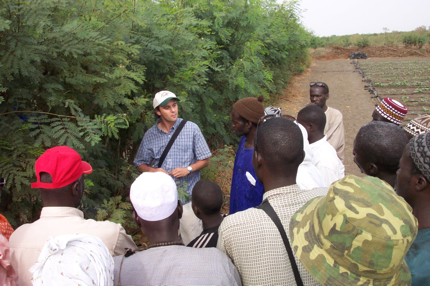
Trees for the Future's International Program Manager John Leary explains multipurpose windbreaks to Senagalese farmers.


These local environmental catastrophes on the tip of West Africa reflect global trends that affect all of us. Clearing forests releases massive amounts of greenhouse gases into the atmosphere, leading to alterations of planetary weather patterns and reducing the planet’

s capacity to sequester the greenhouse gases emitted from industries. As a result, every country is facing climate extremes, such as droughts, floods, melting glaciers, and hurricanes.

Fortunately, local people are coming to understand that some of the solutions to these profound problems often lie within the collective wisdom of their own communities - in agricultural practices that have been ignored for decades.

The initial response of desperate farmers has often been to ask international development organizations to construct water pumps. In fact, access to fresh water often quickly creates a boom in vegetable and animal production. However, pumps have been only a short-term solution. What at first appeared to be a springboard to sustainable development has proven to be the Trojan Horse of the African Sahel.

It is a tragic, but common, scenario. Herds of animals concentrate at the water sources, trampling stressed soils and eating all that remains of local vegetation. New gardening industries further deplete the remaining forest resources as communities cut trees to build wooden fences in order to protect precious gardens.

At the request of village leaders and local forestry officials I began working with these Senegalese farmers in 2001 while serving as an agroforestry extension agent in the Peace Corps. They were ready to listen to anybody with a workable plan. To develop a plan that would accommodate their needs, expectations and capabilities, I knew I needed to listen carefully to what these traditional people had to say.

Agroforestry is a complex systems approach, and it takes a lot of listening to understand the needs of local agricultural systems and to ensure that a tree-planting program will meet those needs. Planting trees is the first line of defense, but it is not an end in itself- it is a preventive strategy to address many environmental, social, and economic problems simultaneously.

For that first year, I mostly listened. I learned that the Wolof people are tired of working - literally and figuratively - for peanuts. More and more, it is taking far too long to produce far too little. Production keeps falling. Soils have lost strength, and the scant remaining topsoil is badly eroded by fierce winds in the dry season. Fertilizers are expensive, and farmers get only one payday per year, in November, after peanuts have been processed. The rest of the year is a painful waiting game. Animals have nothing to eat in the dry season after all grasses have been cut or burned, and women become exhausted from walking miles to collect wood for fuel. As I listened to their stories, it became clear that these farmers actually knew the solution to their problems, and they just needed an outside catalyst.

The farmers told me that first they needed to protect their fields from animals and wind erosion. They told me they needed sources of animal forage, organic matter, and wood for fuel. They said they needed to diversify the types of crops and the timing of production. My role was to bring in outside knowledge and experiences to help communities utilize untapped resources. My solution was windbreaks - double rows of trees that protect fields and produce great quantities of useful products.

The reason these communities had not established multipurpose windbreaks decades ago was simply that no one had ever seen or heard of windbreaks. When the French colonized Senegal, they taught farmers how to use every square inch of their land to produce peanuts- techniques that became the so-called “traditional”

farming methods. But long before the French arrived, Senegalese were experts at integrating millet production in pockets of brush and forests, leaving environments intact to regenerate and serve as natural windbreaks, while keeping available a supply of native fruit and nut trees. The deeper traditional knowledge inherent in this system had been lost when lands were cleared to expand peanut production.

The first year, I worked with a few farmers to surround their field with thick hedges of seedlings. We planted thorny trees on the outside to keep animals out, and we planted fast-growing trees on the inside to establish a tall windbreak. Everyone was surprised by the rapid rate of growth of these species- many grew more than 20 feet in 16 months, starting from seed! I had selected trees that quickly grow back after branches are cut, trees whose leaves drop lots of nitrogen into the starved soils and trees and shrubs that produce beans, fruits and high-protein animal forage (leaves and seed pods).

Farmers in Kaffrine have seen that the solution works. What started with three pilot farmers has expanded into 25 communities and is growing at a rate of 15 villages every year. Families have changed the way they farm, collect firewood, improve soil, feed animals and protect crops. These proud local people, with some encouragement and agroforestry knowledge from an outsider, were able to generate a local solution to a profound environmental problem.

There is much more work to do, and funding is often inadequate, although these programs are not expensive. The global community has a stake in ensuring food security for communities experiencing more droughts due to climate change, but the programs have ripple effects far beyond those communities.

Halting the erosion of the Sahara has direct benefits for people in the Western hemisphere who suffer health problems from the increasing amounts of airborne dust being carried across the Atlantic by trade winds. We live in a profoundly interconnected world, and in the long run, there is no place to hide from the serious consequences of environmental degradation anywhere on the planet.

John Leary is the International Program Manager for Trees for the Future, www.plant-trees.org, Since 1988 TFTF has aided thousands of communities to plant over 43,000,000 trees, returning sustainable productivity to 70,000 acres of land and removing over one million tons of CO2 from the global atmosphere.

This article is archived at www.greendecade.org/tabarchive.asp.

Read More...

‘Blood and Oil’ author speaks

By John Bliss/ Special To The Tab


The first of the Green Decade's 2006 Environmental Speakers, Michael Klare, Five College Professor of Peace and World Security Studies, gave a talk entitled, “Global Petro-Politics: The US, China and the Struggle Over the World's Oil,” on Monday, January 23. His main message was that the world is entering a permanent energy crisis that dwarfs the temporary shortages of the 1970's caused by the Middle Eastern oil embargoes.

Speaking to a large audience at the Newton Library, Klare pointed out that all nations are affected by high oil prices, currently approaching $70/barrel, and that no sufficiently large new oil sources are available to relieve the crisis over the next twenty-five years. He was similarly pessimistic about the prospects for new gas supplies. He noted that the U.S. Department of Energy's Energy Information Agency (EIA) had raised last year's estimate of baseline oil prices out to 2025 from $35/barrel to $60/barrel.

Massive new demands for energy are coming from China, India, and many other developing countries. Klare predicted intensified competition among nations to secure the existing fossil fuel sources for themselves, which will greatly increase the chances for armed conflicts. He said that war with Iran is now more likely than not.

Klare stated that in order to satisfy the EIA's fifty-seven percent projected increase in world demand for oil and gas over the next twenty-five years, Middle Eastern output would have to triple, the Gulf of Mexico would have to remain free of large hurricanes, and nations such as Russia, Kazakhstan and Nigeria would need to remain politically stable. He noted that the problem of supply is exacerbated by the decline in oil production in Alaska and the North Sea.

Klare described the “securitization” of oil supplies by the United States over the past twenty-five years and by China more recently. He noted that the U.S. military is our nation's largest single oil consumer and the primary reason that the U.S. is involved in protecting diverse sources of supply around the world. The U.S. has intervened in Latin America and the Middle East numerous times to protect the world oil markets. China is now seeking to form alliances with Nigeria, Sudan and countries around the Caspian Sea to secure new oil sources, and this, too, raises the risk of armed conflict.

In a positive observation, Klare characterized the high baseline price of oil as “revolutionary” and believes it will stimulate investment in alternative sources of energy in ways not seen before. Although he is concerned about the environmental consequences of increased use of traditional fossil fuels, he sees only a limited role for certain alternative sources, such as the Canadian “tar sands,” and coal gasification, or “clean coal.” He noted that extracting such fuels often has negative environmental impact or requires too much energy.

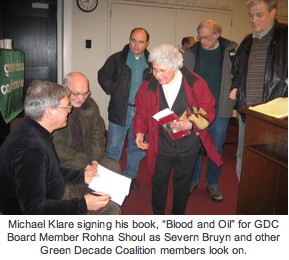
Following the talk, Klare answered many questions about energy supply, international competition and conflict, and alternative energy sources and then he signed copies of his latest book, “Blood and Oil,” which were available for sale.

John Bliss is a member of the Green Decade Coalition/Newton and serves on the Newton Citizens Commission on Energy.

This article is archived at www.greendecade.org/tabarchive.asp.

Read More...

The importance of oysters


Oysters have been a popular food since ancient times. Roman emperors paid for them by their weight in gold. The Romans were so enthusiastic about these marvelous mollusks that they marched thousands of slaves through rugged terrain all the way to the English Channel to gather them. While oysters have had a reputation as a delicacy for many centuries, we have only more recently begun to appreciate their environmental benefits. Scientific research has shown that oysters are voracious filter feeders. They consume large quantities of algae and excess nutrients - up to 5 liters per hour. They play a major role in maintaining the ecological balance in the waters where they grow.

Take the Chesapeake Bay, for example. Today, the water is often turbid, carrying large amounts of sediment and phytoplankton (microscopic organisms), which limits the biodiversity of the bay. However, if we go back approximately 40 years, <!--[if gte vml 1]>

NNHS Biology students Alissa Becker, left, Peter Sun and Joy Huang, right, at Whole Foods Market with their subject.

<![endif]-->we know that nature provided 3-4 million bushels of oysters annually in the bay, which was in great shape ecologically. These oysters filtered all of the bay’s water in a mere 4 to 5 days. During this filtering process the oysters use their cilia to strain out microscopic plants and to wrap whatever they cannot digest in mucus, which they then transport to the mouth. The mouth then does the job of breaking down the material, which moves to the stomach and is eventually expelled as feces or pseudofeces (material excreted, but not through the gut) that contribute to the sediment of the bay. Oysters consume phytoplankton so rapidly that several large oysters can clear an aquarium filled with green water within hours. When oysters strain out microscopic plants in the bay, they create room for other organisms to survive, thus maintaining the ecological balance that fosters species diversity in the bay.

Sadly, the ecology of Chesapeake Bay is now very unhealthy. Oysters are nearly absent from the bay. They have been reduced to one percent of their population of 40 years ago. This is because enormous quantities of nitrogen and phosphorus (over 300 million pounds) are deposited in Chesapeake Bay each year in the form of man-made fertilizers. These provide a tremendous source of nutrients for phytoplankton and algae. When these phytoplankton and algae are overabundant they gather to form large green masses that block the light that would normally filter to the bottom and allow healthy aquatic vegetation like seaweed and ell grass to grow. The excessive phytoplankton absorbs enormous amounts of oxygen very rapidly in a given location, causing anoxia, which means that no oxygen is left to circulate in the water. The result is devastating; it kills off many animals that require oxygen to live. During the summer, when the temperatures are high and there is little vertical mixing of water in the bay, the warmer water remains afloat because it becomes less dense, while the cooler, denser water remains at the bottom. The water at the bottom can be anoxic for many weeks. This destroys many or even most of the living organisms, such as fish, leaving acres of the bay’

s bottom barren.

How did such a healthy bay change so dramatically in just 40 years? There are many answers to this question, but they all boil down to this: humans have been over-harvesting a most precious natural resource. There is historical evidence that the over-harvesting of Chesapeake Bay goes back 140 years, to about 1865. Oyster harvest dropped precipitously between 1890 and 1905; even so, 12-15 million bushels of oysters were still harvested during that time period. Since 1905, the oyster harvest has declined from 5 million bushels annually to a meager 100,000 bushels in 1993. There is clear evidence that it is the drastic decline in oysters that is responsible for the drastic decline in the water quality of Chesapeake Bay.

Fortunately local governments have recognized the nature and the severity of the problem. Laws have been passed to limit the over-harvesting of oysters. For example, the 1927 10 Percent Shell Tax Law required oyster processors to make 10 percent of their shucked shell available for state use in planting, a method to create new oyster beds. The 1953 55 Percent Shell Tax, increasing the tax on oyster processors by 50 percent, was passed to slow the market demand for oysters. The 1972 Moratorium on New Leases suspended awards of new leases of oyster grounds so that the over-harvested oyster grounds could recover. Although these steps taken by governments were inadequate, they were milestones that acknowledged past mistakes and attempted to rectify them. Such laws, when combined with efforts to raise public awareness of the problem, are ways to help bring back the oysters that are so essential to the heath of the environment.

Oysters are much more than a human delicacy. They perform amazing environmental services, not only in Chesapeake Bay but also in many coastal areas all over the world. We humans should do whatever we can to preserve this delicate and delectable creature that quietly works environmental wonders.

Peter Sun was assisted by NNHS classmates Alissa Becker and Joy Huang in writing this article as part of an Environmental Service Project in Zachary Snow’

s Biology class.

This article is archived at www.greendecade.org/tabarchive.asp.

Read More...

Cleaner cleaners in the home

By Jill Hahn/ Special To The Tab


The eye-watering smell of chlorine. The tang of ammonia. It’s great to come home to a clean house. Breathe deep. Or maybe you’d better not.

Cleaning products are among the most hazardous chemicals in your home. And because the chemicals found in cleaners are not as easily dispersed indoors as outdoors, a 5-year EPA study found concentrations of 20 toxic compounds to be as much as 200 times higher inside homes and offices than outdoors.

Then there’s the environmental impact.

Take chlorine bleach, that ever-popular cleaning product. There’s a reason why bleach is great at killing mold and bacteria: it’s toxic. Its fumes are a respiratory irritant. And when bleach, also known as sodium hypochlorite, runs down the drain, it can react with other chemicals to form toxic or carcinogenic chlorinated organic compounds, including chlorofluorocarbons which damage Earth’s ozone layer.

Sodium hypochlorite is just one of a buffet of toxic chemicals you bring into your home with your cleaning supplies. Glance at a few Material Safety Data Sheets that the Occupational Health and Safety Administration requires companies to publish: Formula 409 Cleaner Degreaser: “Reports have associated [exposure to ethylene glycol monobutyl ether with] blood and bone marrow damage...” Lysol Brand Basin Tub & Tile Cleaner:”This product contains [diethylene glycol monobutyl ether] which... has been reported to cause liver, kidney, spleen, thymus and blood effects in laboratory animals when exposed to high levels...” Parsons Ammonia All Purpose Cleaner: “Mild inhalation of ammonia vapors may cause irritation of the nose and throat with coughing and sneezing. A more severe exposure may cause ... labored breathing, and pulmonary edema.”

Not good.

But if you don’t snort the ammonia, or bathe in the Lysol, are these chemicals really a problem? Research shows that they can be. Volatile organic compounds (VOCs), such as xylene, ketones, and aldehydes, are found in many aerosol products and air fresheners. In one study, babies less than six months old in homes where air fresheners were used on most days had 30 percent more ear infections than those exposed less than once a week.

So what is the conscientious homemaker to do? The first thing you need to do is retrain your nose. Your house doesn’t have to smell like a chemistry experiment in order to be clean enough. Before the golden age of synthetic chemicals arrived in the mid-twentieth century, people didn’t have access to such miracles of modern science as Fantastik with Scrubbing Bubbles. Instead, they used a handful of simple yet effective substances, such as soap (not detergent, which is usually petroleum-based), vinegar, baking soda, borax, alcohol, and cornstarch to deodorize, polish, disinfect, scrub, remove stains, and wash clothes. These ingredients are still available, and still effective.

And maybe we need to redefine “clean enough.” We’ve become germ-phobic, with consequences that, paradoxically, may be endangering our health. The Centers for Disease Control have shown that antibacterials such as triclosan and benzalkonium chloride, which have proliferated in household products recently, are resulting in an increase in bacteria resistant not only to those antibacterials but to antibiotics such as penicillins and cephalosporins as well. This is particularly troubling considering that, according to Stuart B. Levy of Tufts University School of Medicine, no current data demonstrate any health benefits from having antibacterial-containing cleansers in a healthy household.

In addition, evidence is mounting that people who have been raised in an environment overly protective against microorganisms may suffer from an increased frequency of allergies, asthma, and eczema.

So when you’re buying your next batch of household cleaners, what should you look out for?

First, avoid products labeled “antibacterial.” For those instances when you really need to disinfect (you’ve just spilled icky chicken water all over your countertop and you’re worried about salmonella), bleach, alcohol, or peroxide will kill those germs without selecting for resistant bacteria.

Don’t buy products with bleach added. If you want chlorine bleach in the house, buy a small bottle and use it sparingly, only when something less toxic won’t work. Otherwise, look for oxygen-based bleach.

Examine labels, and if a product has a VOC concentration higher than 10% of its weight, put it back.

Choose products with a phosphates concentration of 0.5% or less (phosphates aren’t a threat to your immediate health, but they wreak havoc on the health of the waterways near your house). Even if you alternate use of a low-phosphate product with use of a conventional cleaner, it’s an improvement.

Which is a rule to live by. Small steps count. If you succeed in reducing, rather than eliminating, your dependence on toxic chemicals in the home, you’re still doing yourself, your family, and the environment a big favor. And who knows, someday you may find that the fresh, orangey smell of citrus oil means a clean house, and the smell of chlorine only reminds you of a swimming pool.

Jill Hahn, a Newton Highlands resident, is a biologist, a writer, and a mom. All three roles contribute to her interest in environmental issues. She can be reached at jkkhahn@comcast.net. This article is archived at www.greendecade.org/tabarchive.asp

Read More...